Dr Malcolm Read reflects on his involvement with the 1986 Men’s Hockey World Cup.
World Cup hockey at Wilsden? Well, it had a plastic pitch and a stadium of sorts. Phil Appleyard and his early team thought they could make it work. Some four years later the media was eulogising the presentation of the hockey, and the facilities and organisation for the spectators.
About a year before the tournament, I was invited to set up the medical support in the stadium’s small medical room. My first visit eventually unearthed a rather old canvas stretcher and very little else. This needed to be remedied by borrowing a stretcher from the Red Cross. We weren’t really au fait with the snatch stretchers that break down to help a patient to be rolled onto the stretcher which are now used today.
Whilst I’m on the subject of the Red Cross, one must mention how easily they agreed to be available for any injuries in the crowd and they provided cover on all of the tournament days. I feel we don’t often appreciate the commitment of these volunteers who give their time and experience so readily.
I wasn’t going to have to set up a pharmacy to treat every-day GP work but rather first aid pitch injuries. At this distance (40 years on), I’m not quite sure from where I begged, borrowed or supplied from my surgery, the required equipment. However, although most teams would have their own doctor several sides would be without. A rota of available doctors at the teams’ hotels had to be arranged.
Next, a phone call to the nearest NHS hospital to introduce myself and confirm the orthopaedic surgeon would be happy to see any trauma from the games at short notice.
Finally, dope testing. How many could the organisation afford? Who would select the players and how? I believe it was a random few over the tournament. For example: game 5, side A, player number 6; or game 26, side B, player 12. However, I had now to arrange for a ‘messenger’ to deliver the form to the relevant athlete, who would bring the athlete to the testing room within an hour. I also had to get the bottles from the King’s Laboratory and arrange their transport; and obtain confirmation of results to be returned ASAP. Fortunately, I knew the Head of the testing laboratory and he fired up the system. There were no positive tests.
I was delighted to find I had very little work during the tournament beyond the dope testing, but all bases had to be covered.
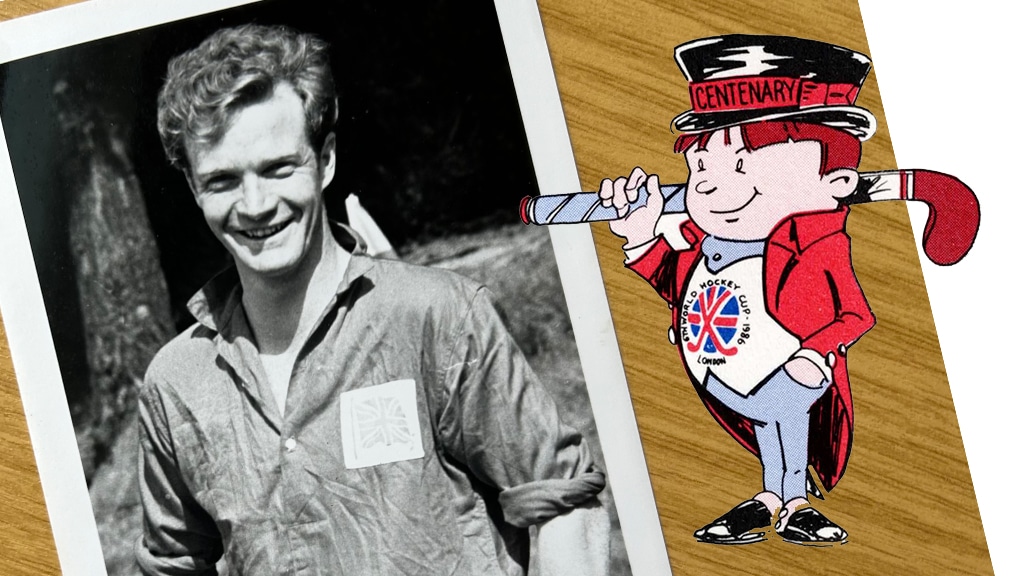
Dr Malcolm Read in his Great Britain playing days (left) alongside the mascot of the 1986 Men’s Hockey World Cup.