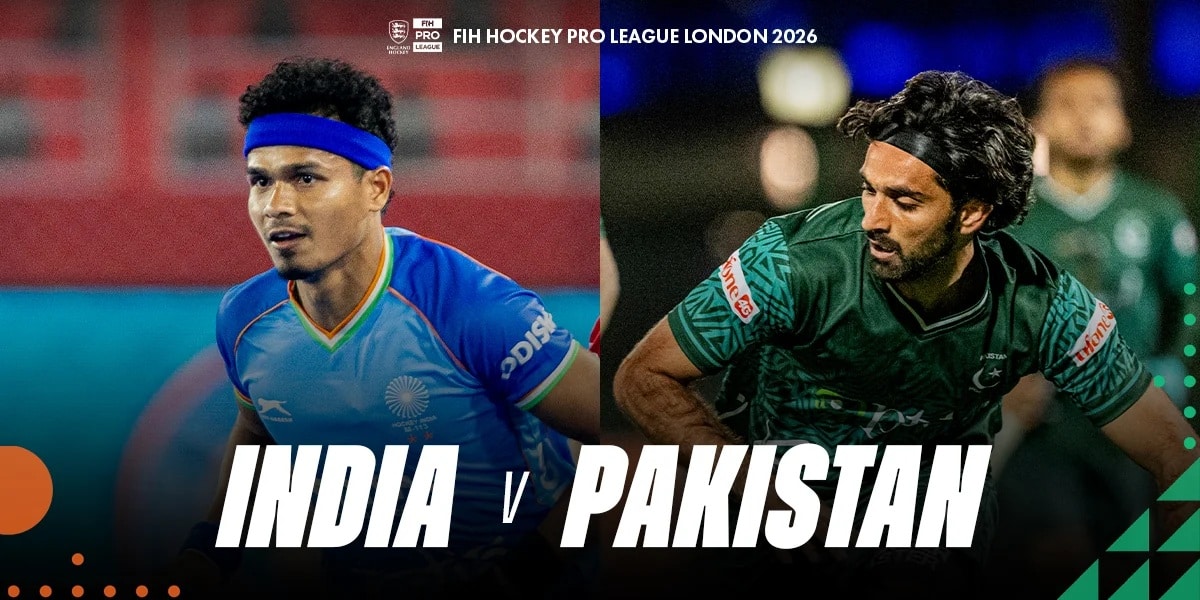
78 years after his Olympic heroics in London, Robin Lindsay’s Great Britain (GB) story has been remembered, impacting a new generation.
On 21 August 2026, The Hockey Museum welcomed the family of Frederick Robin Lindsay (known as Robin) to receive the Great Britain honours cap he never received during his lifetime.
His son David, daughter Charmian and members of their families were there to receive it for Robin. His grandchildren were inspired by his hockey exploits.
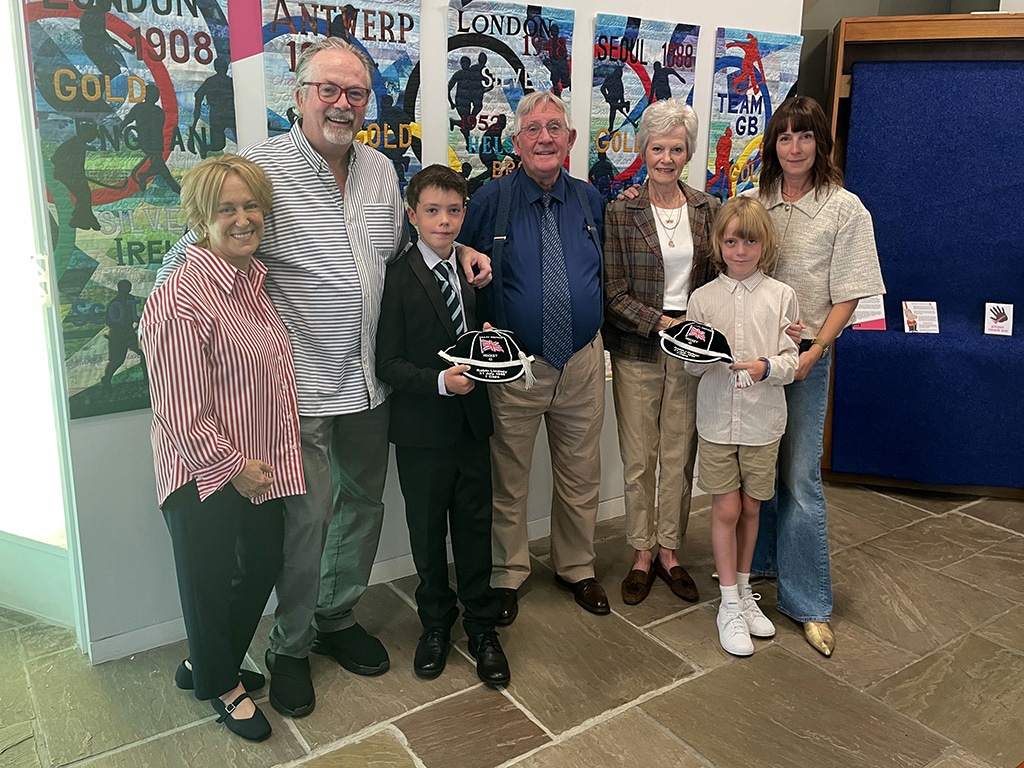
Robin Lindsay’s family gathers at The Hockey Museum with honours caps presented in recognition of his Great Britain hockey career.
Robin was born in Delhi, British India, in 1914 and picked up hockey. His cap was presented to the family by The Hockey Museum’s president, Mike Smith, whose father had attended the same school as Robin: St Joseph’s School (North Point), the Catholic Jesuit school in Darjeeling. What a small world hockey is! Their shared school background provided a remarkable personal link between the Lindsay family and the presentation ceremony.
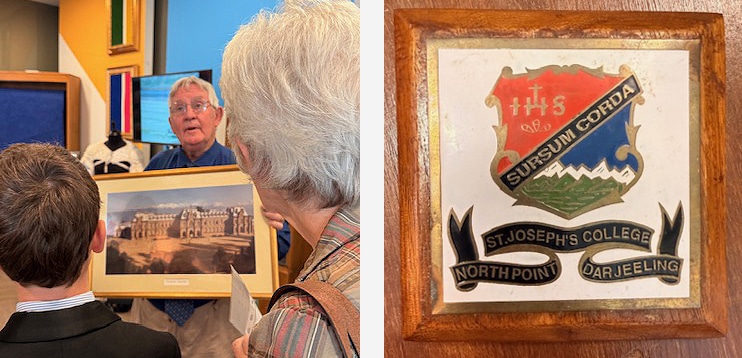
Family members view a photograph of Robin Lindsay’s school St Joseph’s College, North Point, Darjeeling, during the cap presentation event.
Robin’s honours cap records:
- Great Britain men’s player number 43
- GB debut: 31 July 1948
- 7 GB caps
But behind those numbers lies an extraordinary life.
Robin won five caps for Scotland, making his debut against England in 1939 (0–1 loss). His international hockey career was then interrupted by the Second World War, during which he was commissioned into the Royal Tank Corps. He was awarded the Military Cross in 1941 and Distinguished Service Order in 1942 while serving in the North Africa campaign. He returned to international hockey after the war and, in 1948, represented Scotland for the final time before being selected for Great Britain at the London Olympic Games.
On 12 August, he lined up at left half-back in the Olympic final at Wembley against India. Great Britain lost 4–0, but Robin returned home an Olympic silver medallist.
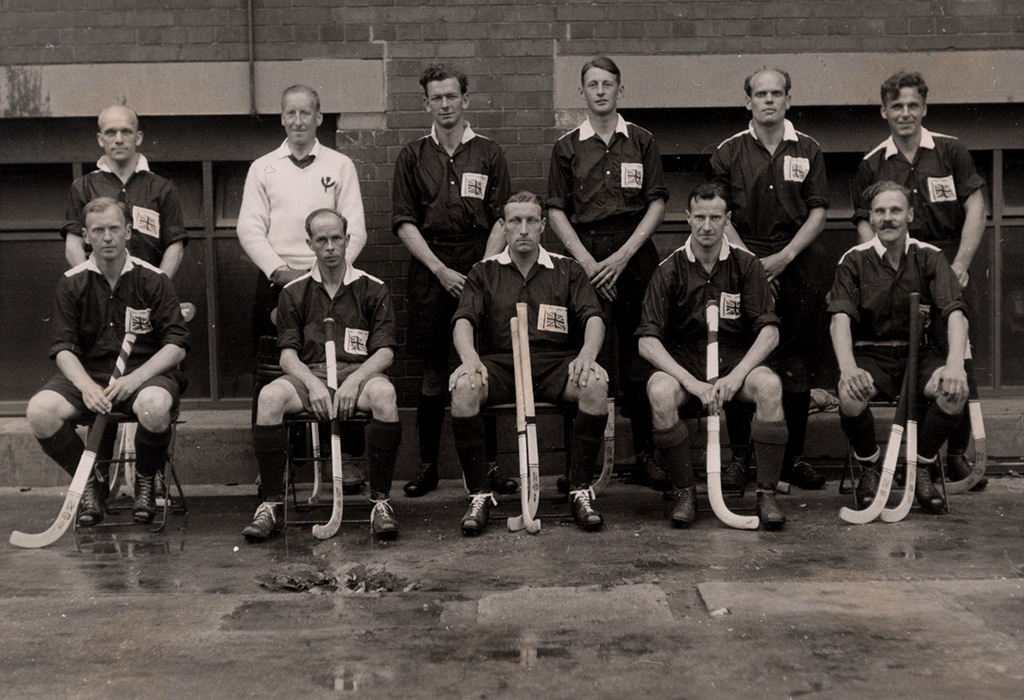
The GB men’s hockey team from the 1948 Olympic Games in London. Robin Lindsay is seated, second left.
The Hockey Museum’s Great Britain Honours Caps Project exists to recognise players from generations when physical honours caps were not presented and, for older generations, to reconnect those achievements with their families.
Robin Lindsay’s unique GB legacy number is 43. Now, 78 years after the 1948 Olympic final at Wembley, his family finally has the cap that represents it.
Do you have a former Great Britain international in your family? We are still trying to trace descendants of players whose honours caps remain unclaimed.
Contact Us – The Hockey Museum
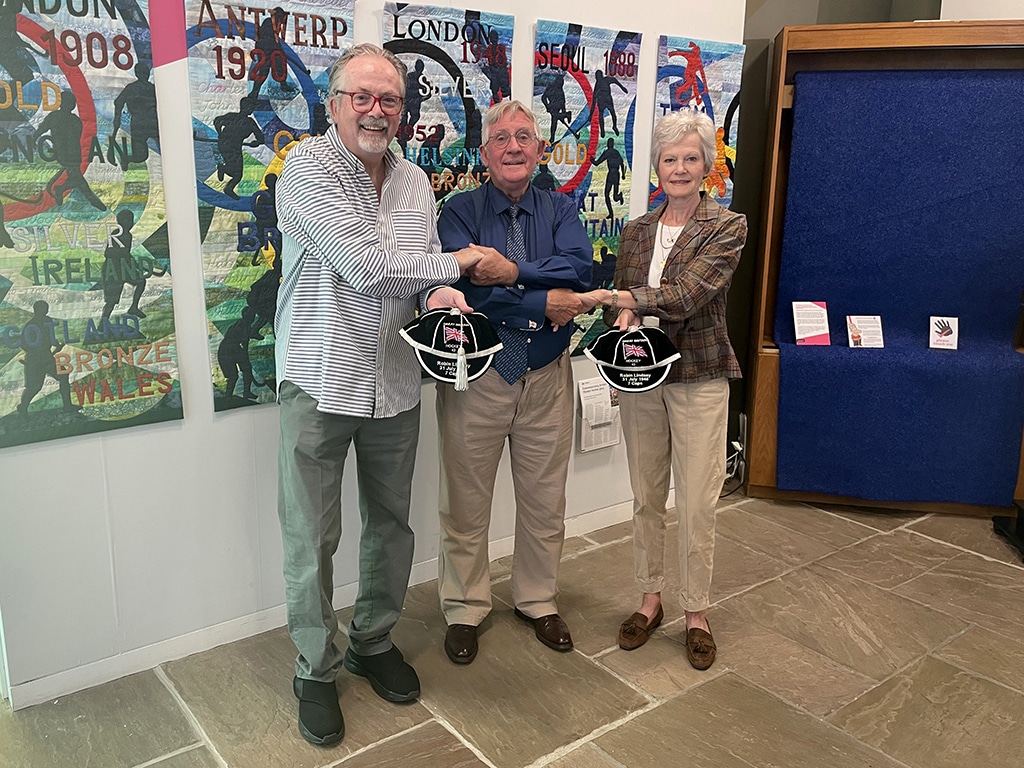
Presentation of Robin Lindsay’s Great Britain honours cap to his son and daughter at The Hockey Museum in August 2026.