The craze for witch hunting swept Europe in the seventeenth century. Lancashire was unusual in the north of England for the frequency of its witch trials. In 1612, 10 people living in the Pendle Hill area of Lancashire were sentenced to death for witchcraft. The evidence of one victim’s nine-year-old daughter condemned her mother to the gallows.
The Lancashire Witches took their name from stories like this. They were a men’s touring hockey side created by Bill Woodcock in 1938 with the intention of playing in the Scarborough Easter Hockey Festival. The team had a slow start, but a group of enthusiasts led by J B (‘Baggy’) Hide kept the Lancashire Witches alive and cackling. They recruited established Lancashire County players and promising youngsters and became a well-known name on hockey festival scene playing in green shirts and socks, and navy blue shorts.
The Lancashire Witches famously had no rules, subscriptions or officials; membership was by invitation only and a Lancashire Witches tie was only earned after a tour or three games.
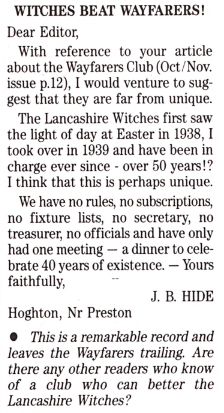
A letter to the editor of a hockey magazine from J B Hide who, despite their being no official club positions, ran the Lancashire Witches touring team for decades.
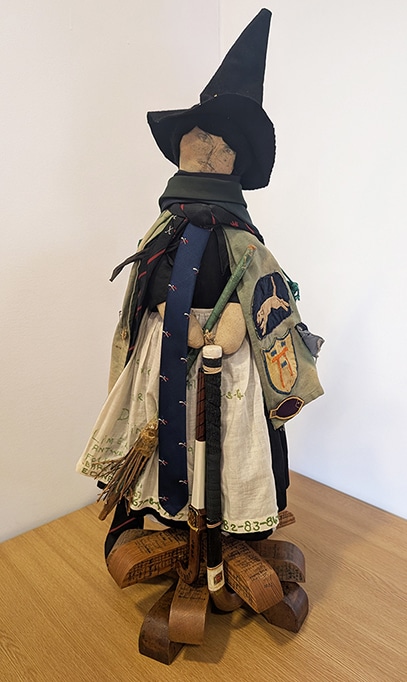
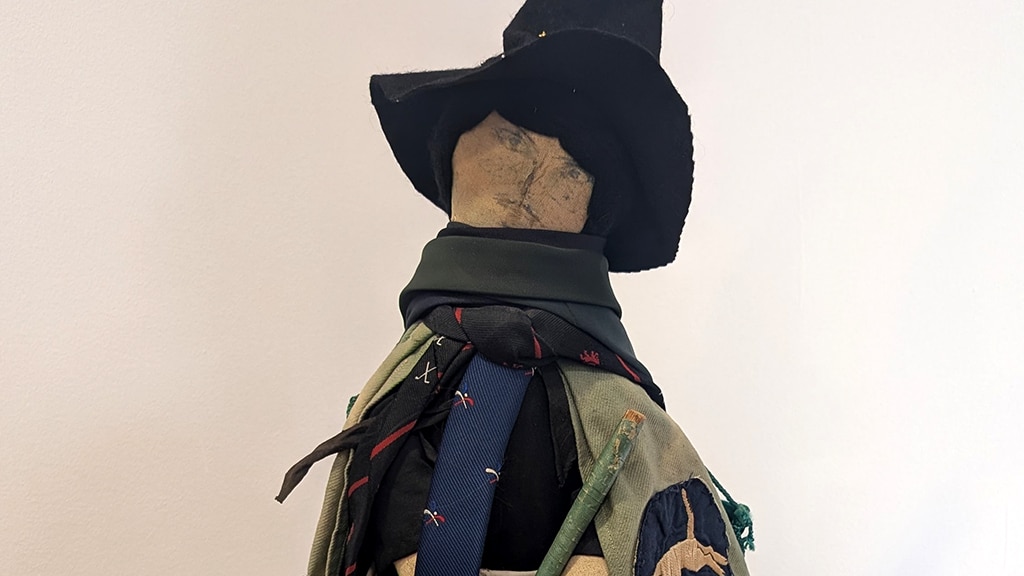
The Lancashire Witches team mascot, created and first adorned with festival memorabilia in 1939 at the Stade Francais Easter Festival in Paris.
From The Hockey Museum collection.
The team’s first festival was in 1939 at the Stade Francais Easter Festival in Paris, the same year the French Army was mobilised in response to the German expansion into Europe. This festival was the birthplace of their mascot the Lancashire Witch, who went on to attend every Easter festival with the team, collecting badges, ties, and pennants along the way. The witch sits on two wooden stands which have been signed by players over the years. Her apron has been stitched with the names of every festival the team attended.
The team reunited in 1948 following the Second World War and went on to play in Easter Festivals in Dublin, Folkestone, Edinburgh, and Antwerp. In 1951 the Lancashire Witches finally attended the Scarborough Festival and went on to win six consecutive Easter successes.
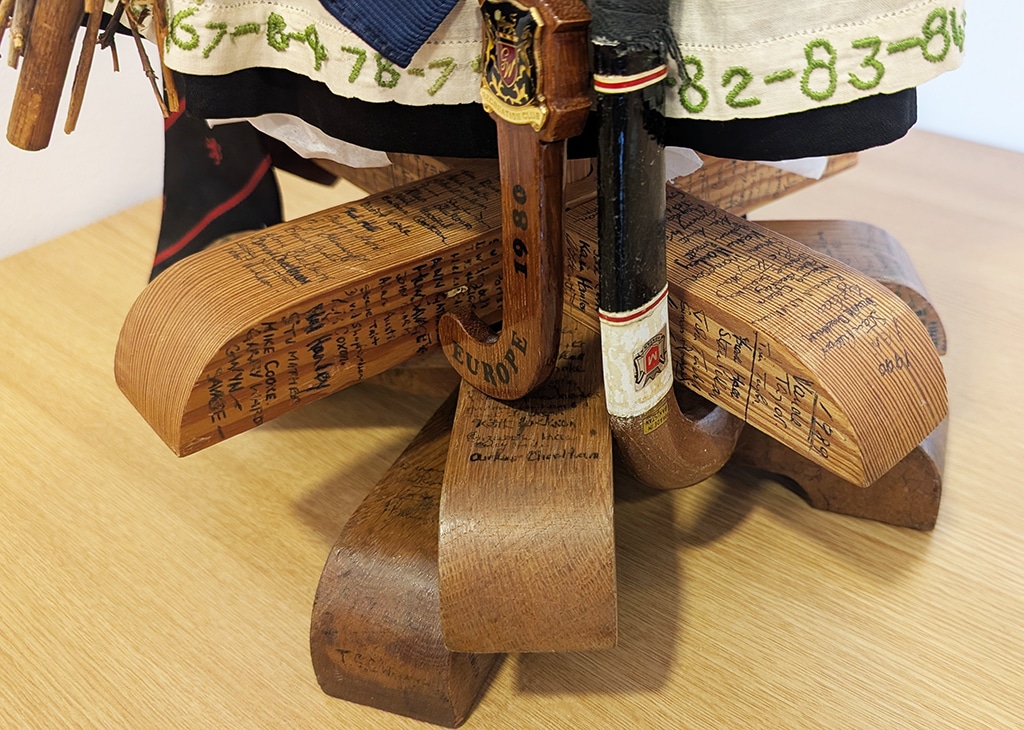
Detail of the base of the Lancashire Witches team mascot upon which are written the names of team members from hockey tours across the twentieth century. Additional slats were added in an incremental star shape as the Witches attended new tours.
From The Hockey Museum collection.
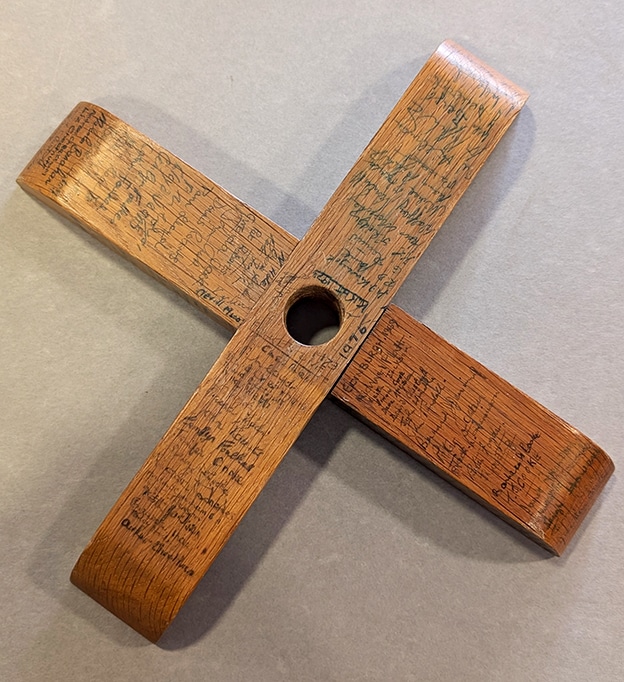
Detail of the base of the Lancashire Witches team mascot which records the names and dates of tours and hockey tourists.