By Malcolm Read
The Bacchanalians Hockey Club would be celebrating their centenary if they were still in existence, and indeed if many of their famed invitational opponents such as the Ghosts, Tramps, Ladykillers, Hornets, Lancashire Witches etc. were still there to celebrate with them. The last vestige of these teams seems to be the Travellers. They still hold an annual dinner in London where attendees travel from the North of England and even the USA. A very few matches are played by the younger members.
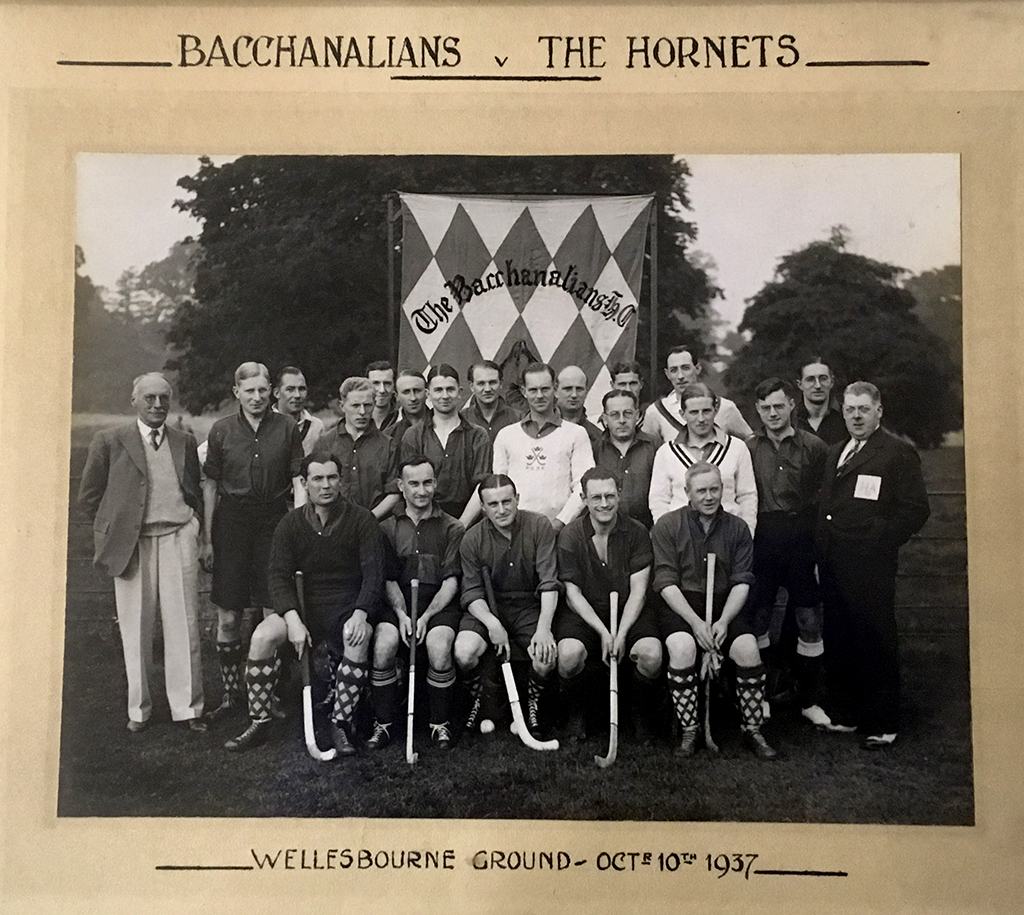
Group photograph taken for the Bacchanalians vs Hornets match in 1937.
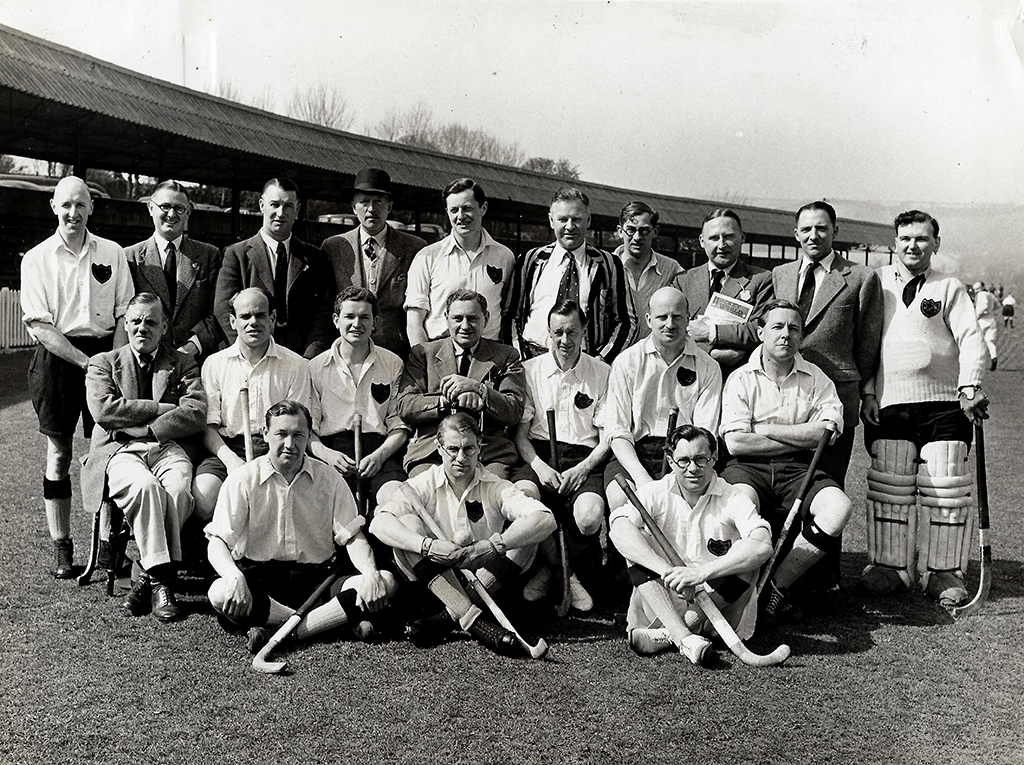
Group photograph taken for the Tramps vs Bromley Hockey Club match in the Easter of 1948.
Hockey in the days gone by was a very amateur but competitive game played on Saturdays. However several enterprising players then formed invitational Sunday sides incorporating many players from a variety of different clubs and ages (the Ghosts was formed in 1902). Your Saturday enemy could become your Sunday friend.
These Sunday teams were formed to attend festivals and as they were all of a high standard, they invariably played each other as well as arranging to play against the universities and local school sides in their area. Festivals such as Folkestone, Scarborough, Bournemouth etc. were not enough and Germany, Netherlands and France soon offered travel, foreign opposition and general bonhomie.
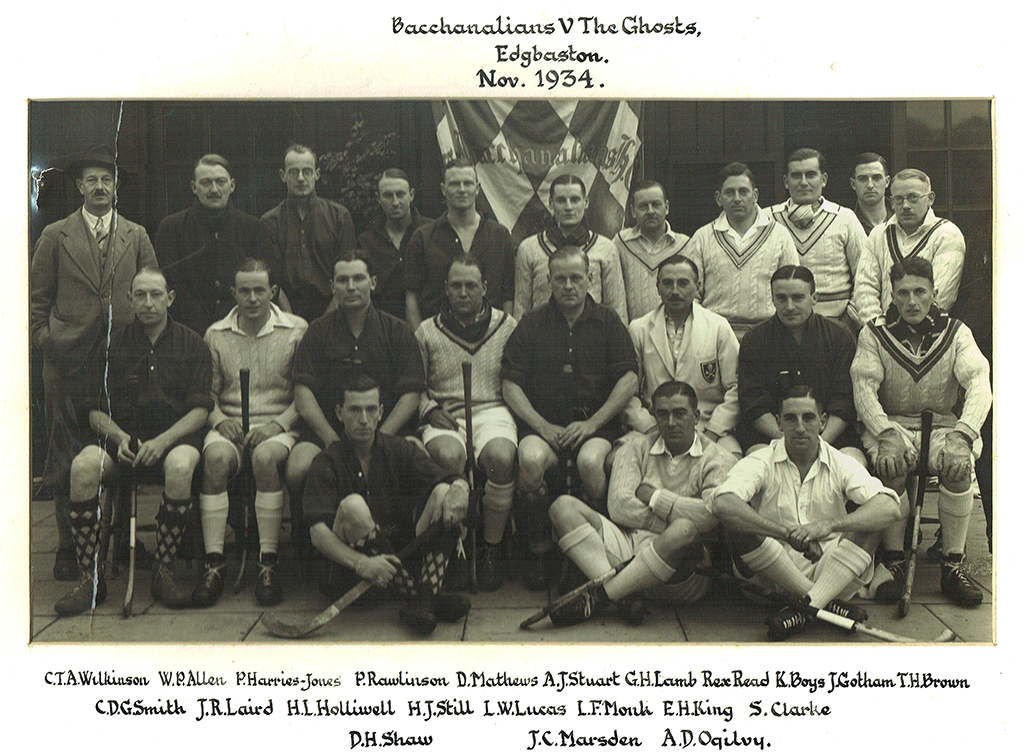
Group photograph taken for the Bacchanalians vs Ghosts match at Edgbaston in 1937.
These sides, although they insisted their players were of a high standard (university colours or county level and above) set out to be very social and have fun. Perhaps the Bacchanalians’ visit to Folkestone in 1927 caps the lot. The Daily Mail noted:
“Men got on to the roof of their Hotel and decorated the upper part of the building with the colours of the Bacchanalian Hockey Team. The parapet, which is about eighty feet from the ground, was draped with wine-coloured trimmings. Chimney stacks were scaled and toy balloons were fastened to the tops of the pots. A Plaice had been placed on a wireless aerial and hung suspended over the road much to the amusement of visitors and residents.”
During the following six months the plaice (Pleuronectes platessa) became a visitor’s attraction and received recognition from Folkestone council. It was awarded a Classical Tripos from Oxford University. Hence the Bacchanalians’ club badge and Latin motto “Locus in sole” or “A Plaice in the Sun”. At the Easter Festival in 1932 the Ghosts presented a plaice embalmed in glass to the Bacchanalians at the ‘High Feast’.
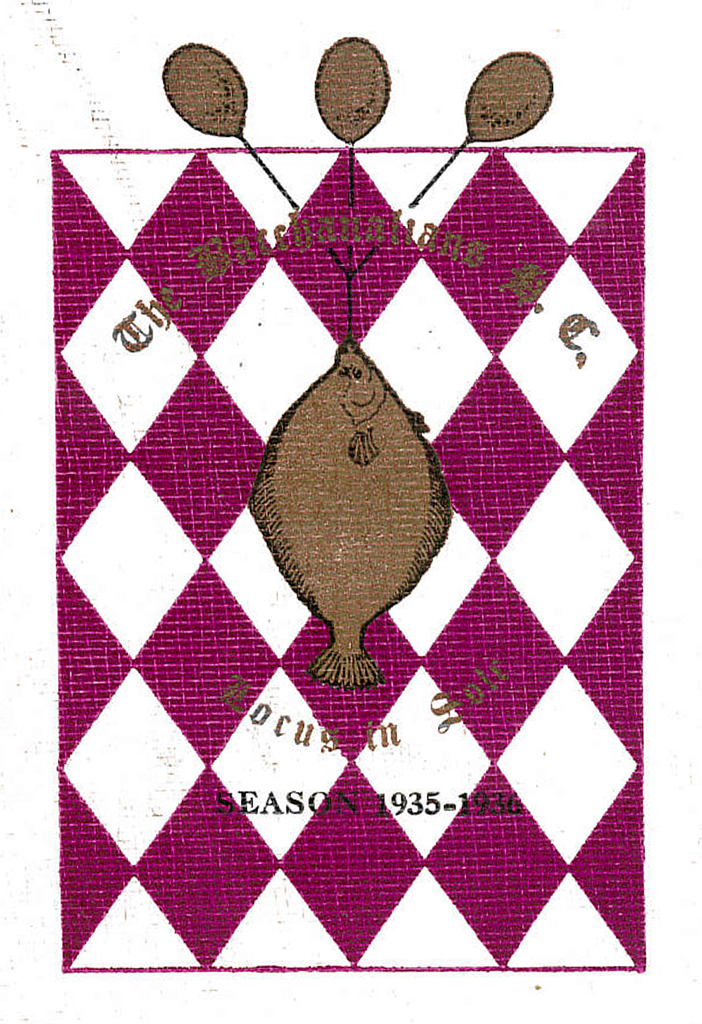
The Bacchanalians’ club badge. The central plaice features on the flag in the earlier team photograph with the Hornets.
This joking attitude off the field can be seen even in the formation of the Bacchanalians’ rules:
- Rule no.4. “Wine colour is the colour of the Club.”
- Rule no.5. “Any member offending against the club … to be invested with the ‘Order of the Purple Spot’. This shall be attached to the face of the offender”.
- Rule no.9.4. “The committee shall be one over the eight”; that is to say, nine members – one over the eight being an early twentieth-century expression for being drunk.
The fun and camaraderie between these sides was often student level humour but cemented many long-standing friendships that lasted way into director level of high-powered firms.
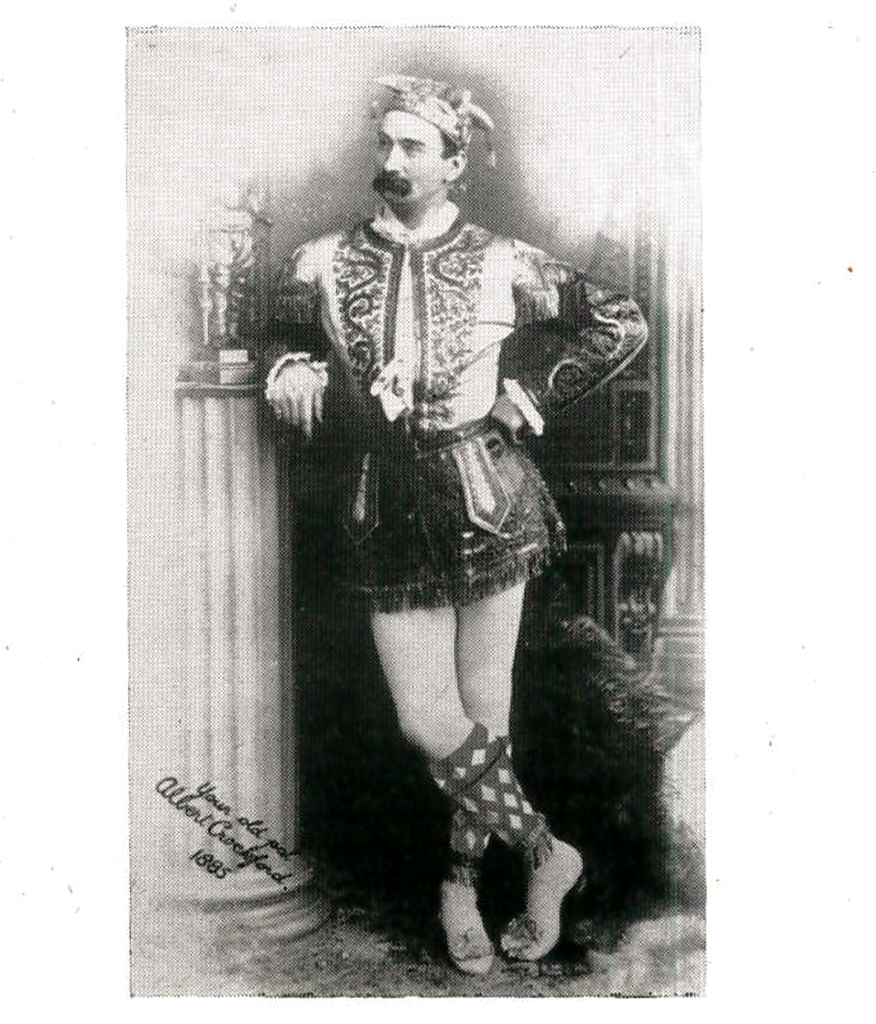
Photograph of Albert Crockford, who first wore the Bacchanlian Colours in 1885 and whose “consistent appreciation of the fermented juice of the grape was abhominal, and earned him much respect.”
This play hard and socialise long approach came before drink driving rules and was backed up by clubs playing Sunday six-a-side matches. Epsom Ladies were famed not for their jug of beer but their jug of gin and tonic. Of course, all matches were played on grass, which required several pitches to be available for multiple XIs etc. at the same time. All players then met together in the club house bar after the games, which meant that even within clubs, friendships extended beyond your own team. Artificial turf and the changed rules have revolutionised hockey for the better, but the variable starting times has prevented many members from ever meeting and socialising with some players from their other club teams.
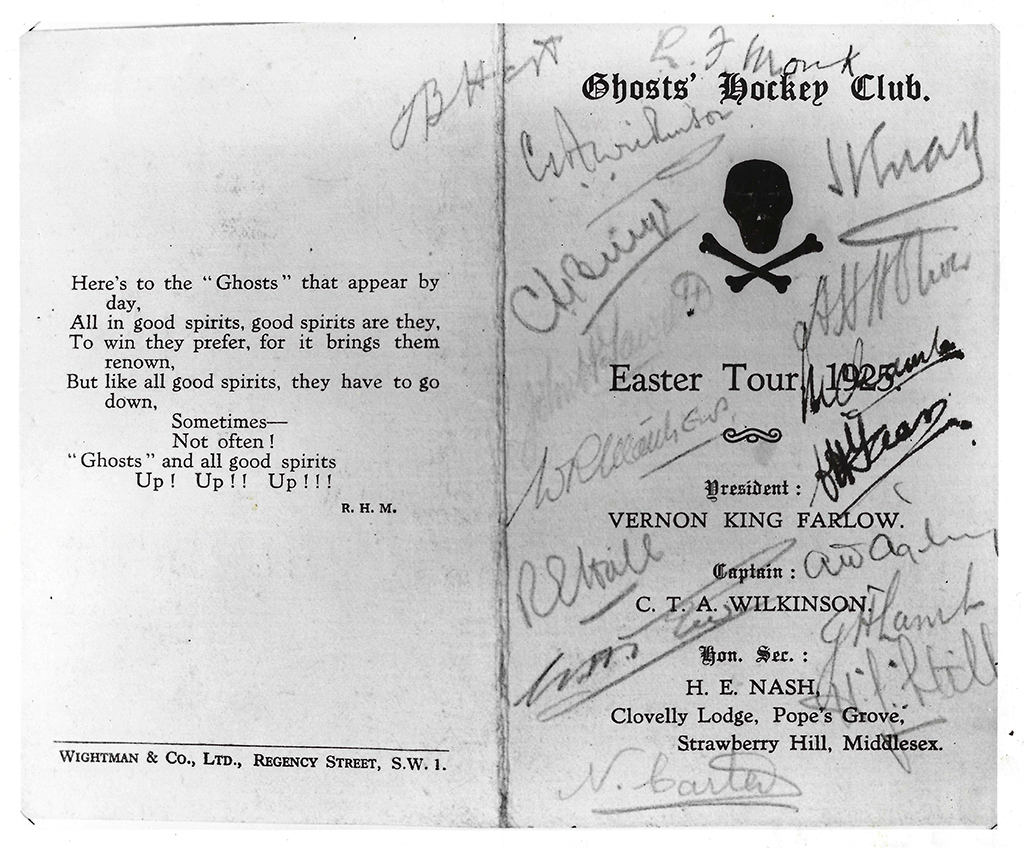
A signed programme from the Ghosts Hockey Club Easter tour of 1925. The reference in their club song to drinking spirits is very appropriate behaviour for a ghost and reveals that the Bacchanalians were far from the only social drinking hockey team of the amateur era!
There were localised leagues, like the London League, but no national leagues requiring long-distance travel. Indoor hockey on a Sunday was just starting and there was certainly no professional future envisaged for UK players. This was reflected in the National sides who would play only three to five matches per season, and usually without any practice together. Indeed, sometimes without even knowing who the other players in the side were.
So, what did these now extinct clubs achieve? They certainly raised the standard of hockey by pooling together the better players from different clubs, and they took their players to schools and universities to foster and encourage the young hockey player. The formal/informality of the Bacchanalians’ rules, and the Travellers’ Three-handed Loving Cup, where each side of the drinker was guarded by another member standing up, encouraged longstanding friendships and a sense of belonging, not just in your local area but across the country. These long-lasting friendships may still be seen in the gathering of 80-year-olds at the annual Travellers’ dinner and various golf days where 30–40 turn up.
Hockey has moved on. Artificial turf and the changes in rules have made the game faster, the players (many now professional or semi-professional) fitter and stronger. Club and national sides are developed from a young age and all are playing many more high-level matches per season. Training is par for the course, whereas we turned up and played during the season. We were usually playing cricket or tennis in the summer. The sides of today would whop the side of yesterday, but are they having the fun we had? You can only be a child of your time.
Malcolm Read played hockey for:
Cambridge University and the East Division
Dulwich Hockey Club and Kent County (national champions)
England and Great Britain
Guildford (national indoor and outdoor champions)
He was a member of the Acrostics, Hornets and Travellers invitational hockey clubs