The Hockey Museum was honoured to welcome members of the family of Great Britain (GB) Olympian John Cockett on 22 September 2026 for the presentation of his GB honours cap.
The cap was presented to John’s son, Anthony Cockett, on behalf of the family, recognising his distinguished international hockey career and his lasting contribution to the sport both on and off the field. His grandchildren also attended the presentation, with the event having been organised collaboratively with John’s granddaughter, Ottilie.
John Cockett was a leading English hockey player in the post-war era. He represented GB at the 1952 Olympic Games in Helsinki, where the hockey team won the bronze medal. His international career also included numerous appearances for England, and he remained deeply involved in hockey long after his playing days had ended.
John Cockett earned 18 representative caps for GB and is GB men’s player legacy number 70.
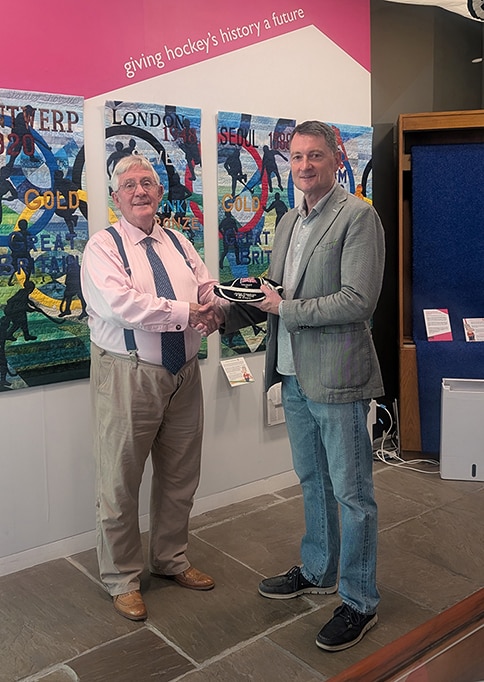
Anthony Cockett, son of John Cockett, receives a Great Britain honours cap recognising his father’s international hockey achievements from Mike Smith, President of The Hockey Museum.
While his achievements as an Olympian secured his place in British hockey history, many remember Cockett most fondly for his decades of service as a teacher and coach at Felsted School. During nearly 40 years at the school, he combined teaching and housemaster responsibilities with hockey and cricket coaching, helping to inspire generations of young players.
His profound influence can be seen in the number of Felsted pupils who progressed to the highest levels of the game. Among those coached by Cockett were:
- Tim Lawson, who went on to represent Scotland and GB, competing at the 1968 Mexico City Olympic Games.
- Tony Ekins, England international player and GB hockey Olympian (Mexico City 1968 and Munich 1972) who developed under Cockett’s guidance at Felsted.
- Richard Oliver, England international player and GB hockey Olympian (Mexico City 1968 and Munich 1972) who also progressed to international level after playing at the school.
- Geoff Nott, another England and GB international player who benefited from Cockett’s coaching and mentorship.
The presentation of the honours cap ensures that John Cockett’s contribution to hockey is formally recognised and preserved for future generations. His legacy extends far beyond his Olympic bronze medal, encompassing decades of coaching, mentoring and inspiring young players who would go on to represent their countries at the highest level.
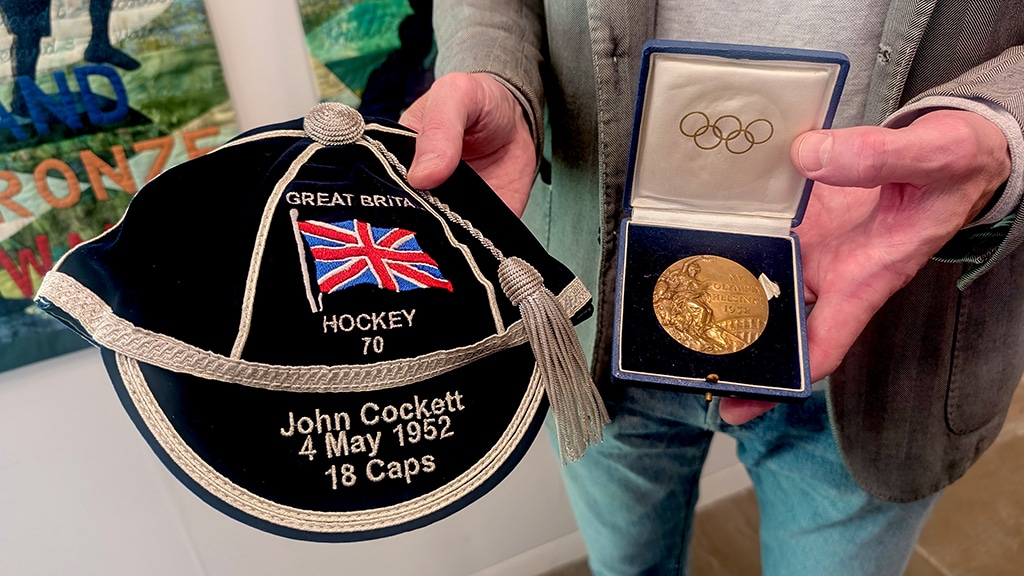
John Cockett’s Great Britain honours cap and bronze medal from the Helsinki 1952 Olympic Games.
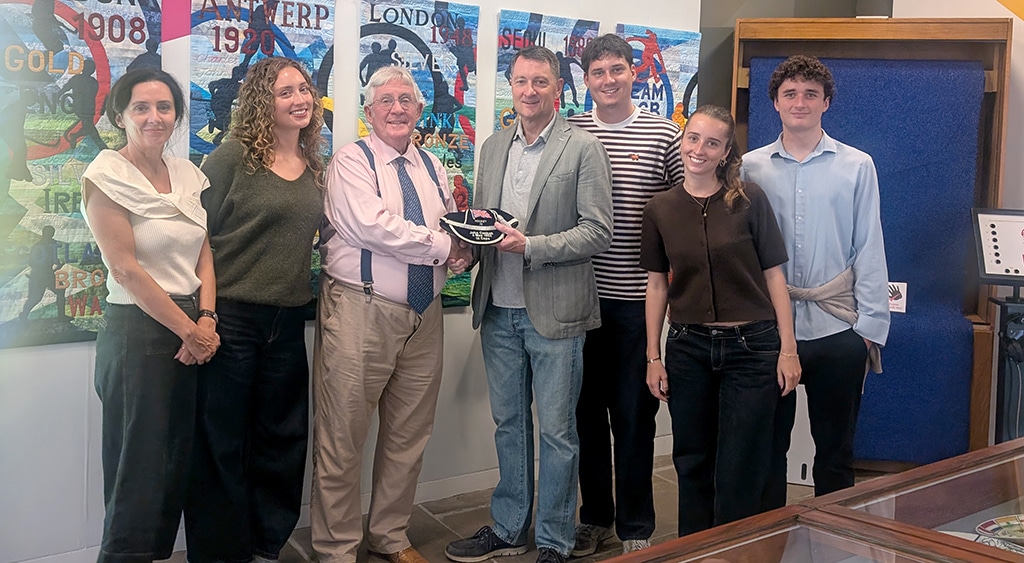
Great Britain honours cap presented to the family of Olympic bronze medallist and renowned coach John Cockett at The Hockey Museum, 22 September 2026.
Olympic memories preserved on film
Readers can enjoy a short film interview in which John Cockett reflects on the hockey tournament at the 1952 Helsinki Olympic Games. In the recording, Cockett discusses the contrasts between British and South Asian styles of play and offers first-hand insight into one of the defining events of his sporting life.
The film also includes footage from the 2010 Champions Trophy in Nottingham, England, where members of the 1952 GB team, Sir Derek Day and Neil Nugent, received retrospective Olympic bronze medals. Their teammates had received their medals following the bronze medal match, but only 11 had been given out at the time.
Watch the short film below.