For Yan Huckendubler, the 1998 Hockey World Cup in Utrecht was supposed to be a spectator’s trip.
Instead, it became the beginning of a remarkable journey into international sports communications, placing him at the heart of one of the most significant hockey events of the era. Armed with a laptop, a pioneering digital camera and a determination to keep Canadian hockey fans connected back home, Yan found himself documenting a tournament that impacted the format of future World Cups as well as the way the sport was reported.
At the time, the internet was still in its infancy. Having launched a website for Field Hockey Canada only a year earlier, Yan secured media accreditation for the World Cup and set out to provide live updates from the tournament. It was a groundbreaking effort. Canadian fans, who had often relied on late-night telephone calls from players to learn international results, suddenly had access to reports, photographs and daily updates from the other side of the world.
“I had planned to go as a spectator,” he later recalled, but Utrecht offered something much bigger: a chance to help connect a scattered hockey community through emerging technology.
A pioneer in hockey’s digital age
Today, uploading photographs and publishing match reports takes seconds. In 1998, it was a very different story.
Yan manually coded webpages and uploaded them through slow and costly dial-up connections. Among the approximately 250 accredited journalists at the tournament, he was one of only four people posting directly to a website! Most reporters were still filing stories by telephone or fax.
To modern audiences, Yan’s equipment now seems almost unimaginable. A recently purchased Sony digital camera stored around 20 photographs on a 1.4MB, 3.5-inch floppy ‘diskette’ that slotted directly into his computer. The images had to be small to make uploading possible. Today, the capacity of 20 diskettes would be needed to load just one digital photograph! Yet those modest photographs and digital diary entries gave Canadian supporters an unprecedented window into their national team’s World Cup campaign.
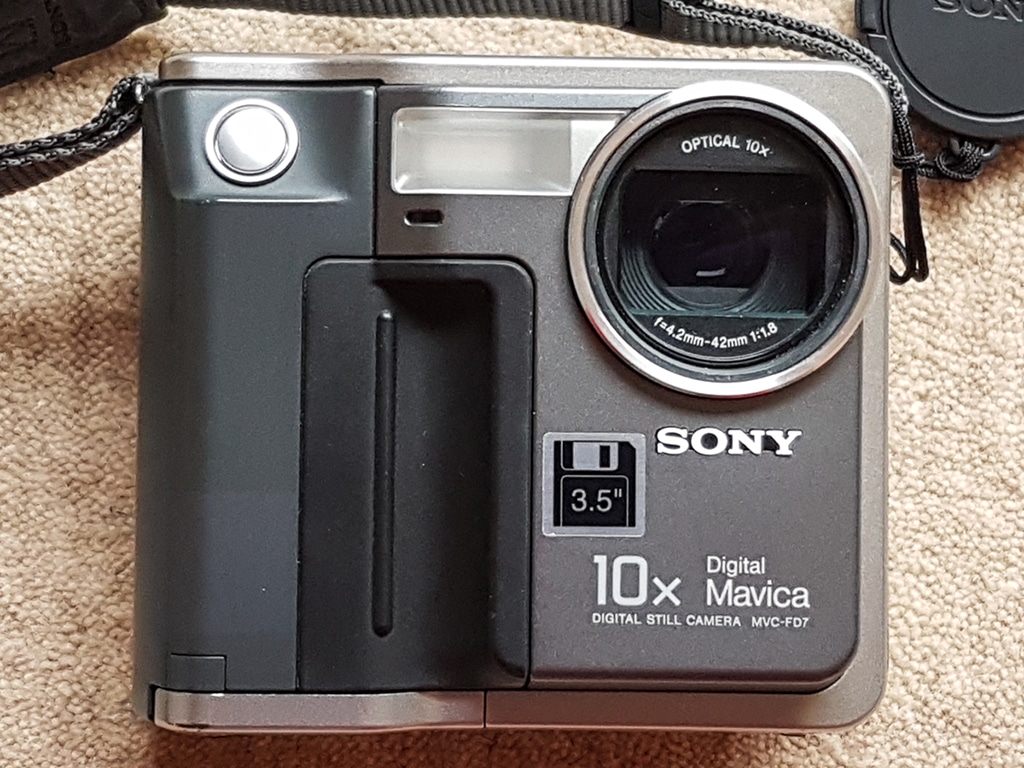
Yan Huckendubler’s Sony digital camera used at the 1998 World Cup in Utrecht. It was pioneering technology at the time and captured around 20 photographs on a 1.4MB, 3.5-inch floppy disk.
Image courtesy of Yan Huckendubler.
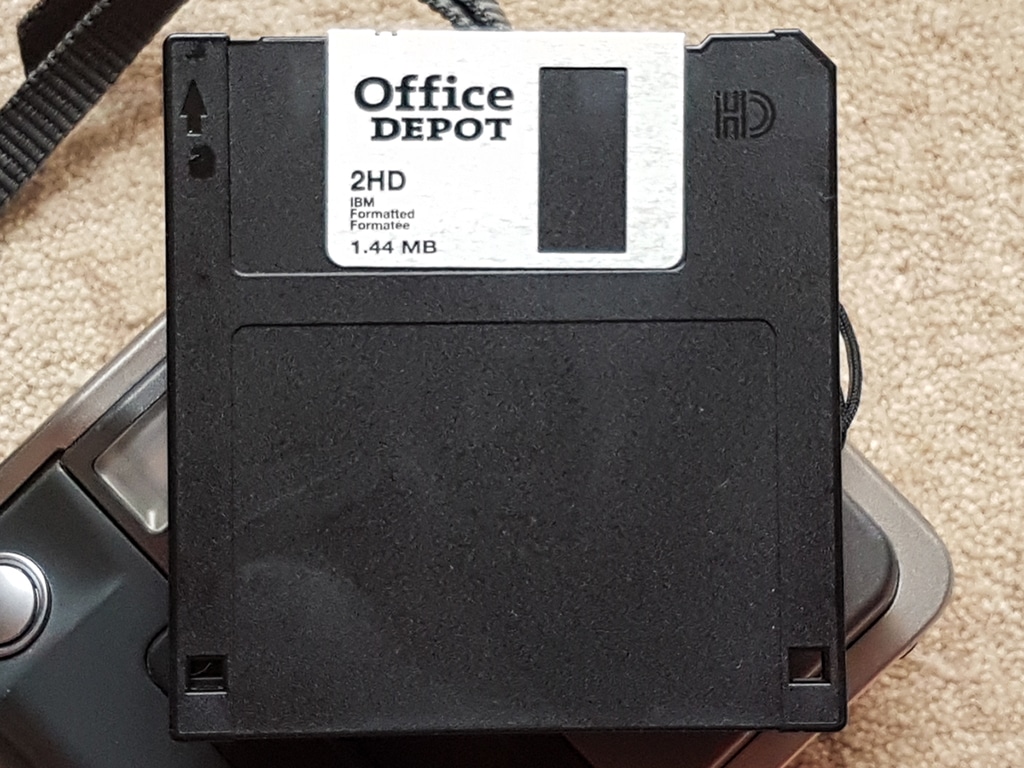
The 3.5-inch floppy disk from the Sony digital camera used by Yan Huckedubler at the 1998 World Cup in Utrecht.
Image courtesy of Yan Huckendubler.
Swept up by Oranje fever
The tournament itself left an even deeper impression. For the first time, the men’s and women’s World Cups were staged together, creating a festival atmosphere unlike anything Yan had previously experienced. Every day, tens of thousands of supporters flooded Utrecht’s stadiums, many dressed head to toe in orange to support the Dutch teams.
One stage, two World Cups: how Utrecht changed hockey history – The Hockey Museum
Again and again in his diary, Yan marvelled at the crowds. He watched young Dutch supporters sing, chant and analyse games with encyclopaedic knowledge of the players. He described packed stadiums, spontaneous celebrations and spectators who applauded not only goals but moments of technical brilliance.
Even years later, one memory remained vivid.
“Even after a week of competition here, I still have tears coming to my eyes when I hear this crowd, 15,000 strong, roar with pleasure when a player executes a fancy technical trick.”
The Dutch passion for hockey left a lasting impression on him. The atmosphere transformed every match into a celebration.
Following Canada’s rise
As a Canadian reporter and supporter, Yan naturally focused much of his attention on the men’s national team (Canada’s women did not feature in the World Cup).
From a brave performance against hosts the Netherlands to dramatic draws against New Zealand and Germany, Canada’s campaign became one of the tournament’s surprise stories. Yan chronicled every twist and turn, celebrating the team’s resilience and growing confidence.
One of the defining moments came when Canada stunned India 4–1, securing a place in the 5th/8th classification round and guaranteeing the country’s best-ever Men’s World Cup finish at the time. The victory triggered emotional scenes among players, supporters and families who had travelled across the world to be there.
When veteran captain Patrick Burrows played the final international match of his distinguished career, Yan’s online diary entry ensured the moment received the recognition it deserved.
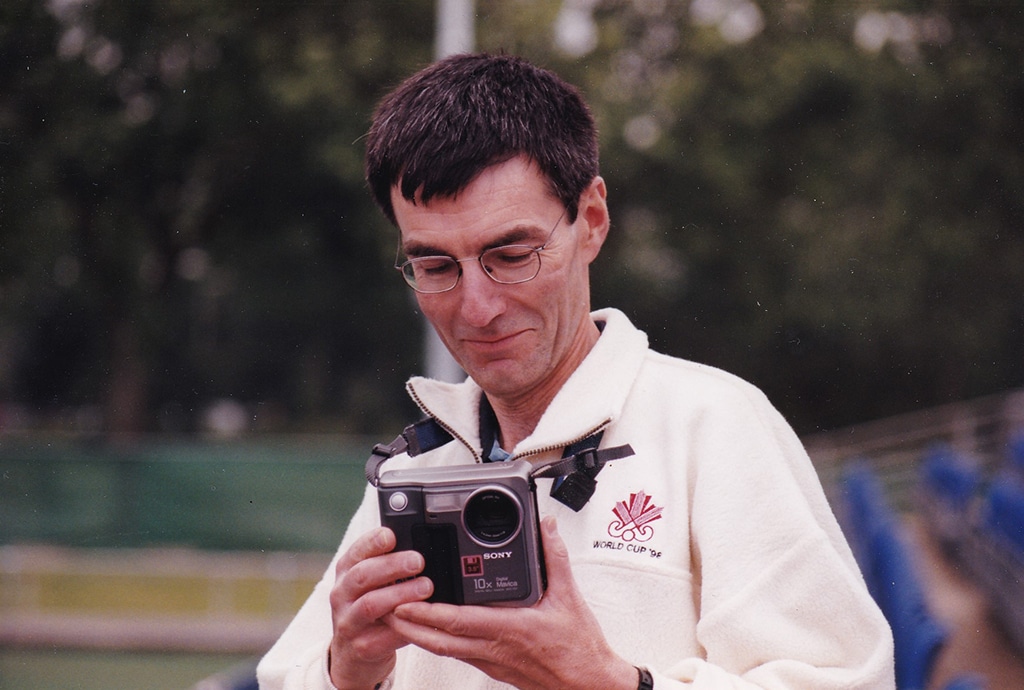
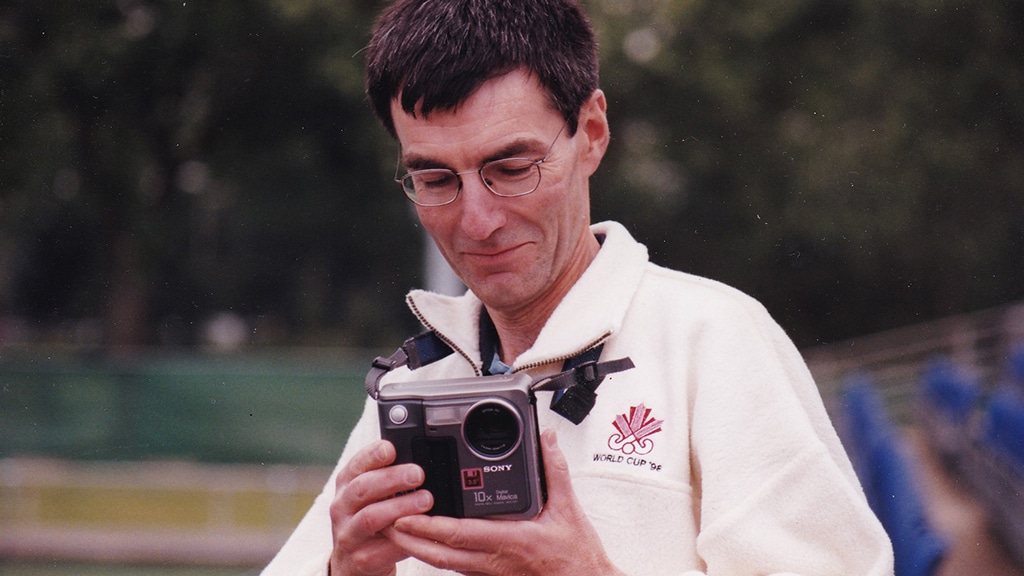
Yan Huckendubler, wearing a Canada Field Hockey fleece, holding his pioneering Sony digital camera at the 1998 Hockey World Cup in Utrecht.
Image courtesy of Yan Huckendubler.
Life inside the media centre
Away from the field, Yan was equally fascinated by the characters and culture surrounding the event.
The media centre became an education in international journalism. Veteran reporters from England, India, Pakistan and other hockey nations filled the room, many smoking despite the prominently displayed no-smoking signs and filing stories through methods that now seem prehistoric.
And then there was the legendary media bar.
One detail that remained firmly lodged in his memory was the complimentary Heineken available to accredited journalists. Yan cheerfully admits that, like many of his colleagues, he left Utrecht with a branded “World of Hockey” beer glass as a souvenir.
The perfect ending
As the tournament reached its climax, Yan witnessed one of the sport’s great occasions.
The Dutch men’s team staged a dramatic comeback to defeat Spain in the World Cup final, sending the home crowd into ecstasy. The scenes that followed encapsulated everything he had loved about Utrecht: the colour, emotion, passion and sense of community.
Standing among thousands of celebrating supporters, Yan found himself swept away by the moment:
“Tears came to my eyes as I was wildly clapping and dancing along with the orange crowd.”
A life-changing tournament
More than a quarter of a century later, Yan Huckendubler’s memories of Utrecht remain vivid. The 1998 World Cup was his first major international hockey event as a media representative and one of the earliest examples of live online field hockey reporting. What began as a planned spectator trip unexpectedly became the starting point of a second career in the sport he loved.
The success of his online coverage for Field Hockey Canada attracted wider attention. Following Utrecht, he was selected by the Canadian Olympic Committee as a media attaché for the 1999 Pan American Games and the 2000 Olympic Games in Sydney, before taking on similar roles at Commonwealth Games, World Cups and major international tournaments around the world. Over the following decades, he became one of the most familiar communications figures in international hockey, serving Field Hockey Canada, the Pan American Hockey Federation and the International Hockey Federation (FIH) at dozens of elite events.
Yet another transformation was still to come.
While building websites and producing communications content, Yan discovered how difficult it was to obtain images from competitions. Initially relying on professional photographers for a handful of pictures, he decided to learn photography himself. A camera purchased for the 2007 Pan American Games in Rio de Janeiro became the beginning of a new passion. He studied the craft, upgraded his equipment and sought advice from experienced professionals.
By 2011, he had made the decision to switch completely to photography. What started with a few “half-decent” pictures evolved into a distinguished career photographing some of hockey’s biggest events. Through his lens, he continued telling the stories of hockey, not with dial-up connections and manually coded web pages, but with images that captured the speed and emotion of the game.
Utrecht 1998 was a turning point. It set him on a path that would eventually take him to seven Olympic Games, multiple World Cups and countless international competitions around the globe. His memories would become the foundation of more than two decades of service to the sport, first as a digital communicator and later as a respected hockey photographer.
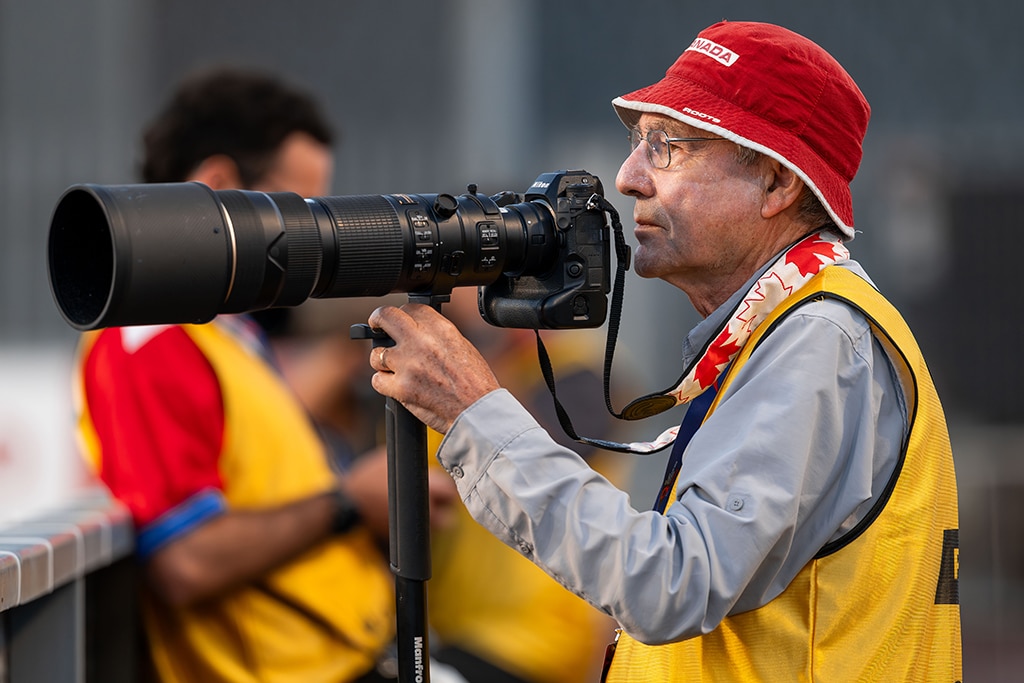
Yan Huckendubler with his contemporary camera kit at the March 2026 World Qualifier in Chile. Comparing it to the digital camera he used in 1998 highlights the accelerated advance in technology since 1998.
Image courtesy of Yan Huckendubler.