In November 1924, Lieutenant Colonel Charles Eckford Luard attended the Scindia Gold Cup hockey tournament in the princely state of Gwalior and initiated contact with various individuals from hockey clubs and regional hockey associations around British India. He invited them to a meeting the following year, which would decide on the unification of Indian hockey and lay the groundwork for the constitution of a national association. The first meeting of the IHF took place on 7 November 1925 when representatives gathered in the Moti Mahal royal palace in Gwalior. The meeting lasted four hours and many points were discussed between the eight attendees:
- Colonel Kailas Naryan Haskar CIE, President of the Gwalior Sports Association
- Colonel Bruce Turnbull from the Army Sports Control Board
- Albert Barmes Rosser from Bengal
- Charles E Newman from Punjab
- Mr Battacharjee from Western India
- Professor Gangulee from Gwalior
- Professor Sondhi from Punjab University
- Mr Smith from the North-Western Railway
Colonel Haskar hosted the meeting and in a speech to attendees he motioned for the creation of a central association for Indian hockey. The representatives were all in favour and the decision was passed for the country’s first governing body for hockey.
Following the decision for a central body, the remaining points of discussion were centred around the function and rules of the new federation. Scotsman Colonel Bruce Turnbull had played hockey for the 23rd Sikh Pioneers team since the early 1900s. He was appointed IHF’s first President and would hold this position until 1927.
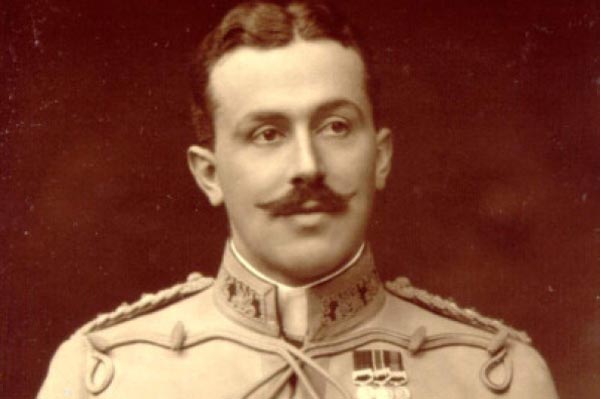
Colonel Bruce Turnbull, the first President of the Indian Hockey Federation.
Within the four-hour discussion, the representatives agreed on the code of the Indian Hockey Federation. Two rules in particular were isolated and reported on when the IHF was first officially announced. Both rules express the importance of remaining strictly amateur.
- “No affiliated club, nor any player or member of such club, shall institute, or take part in, any hockey challenge cup, or prize, competition”. There were three listed exceptions to this rule.
- “Any players receiving directly or indirectly, remuneration of any sort, in addition to his railway (or road) fare and necessary accommodation expenses actually paid, shall be considered a professional, and shall be excluded from the provincial association concerned. Any club playing such player shall also be so excluded. Training expenses which are not paid by players themselves will be considered as remuneration beyond necessary travelling and accommodation expenses.”
One year after the formation of the IHF in 1926, India would take part in its first international match against New Zealand. The Indian Army Hockey Team had been formally invited by the New Zealand Hockey Association to play as early as 1924 however the invitation was only accepted and the tour organised after the IHF’s formation. Trials for those wanting to represent their nation took place in Lahore where newly appointed IHF President Colonel Bruce Turnbull was involved in the decision-making process. The chosen team was announced on 4 March 1926 and of the 17 players selected for the tour, four of them were British Army Officers. The tour consisted of 21 matches including three ‘test matches’ against the New Zealand national team. These matches ended in one win, one draw, and one loss.
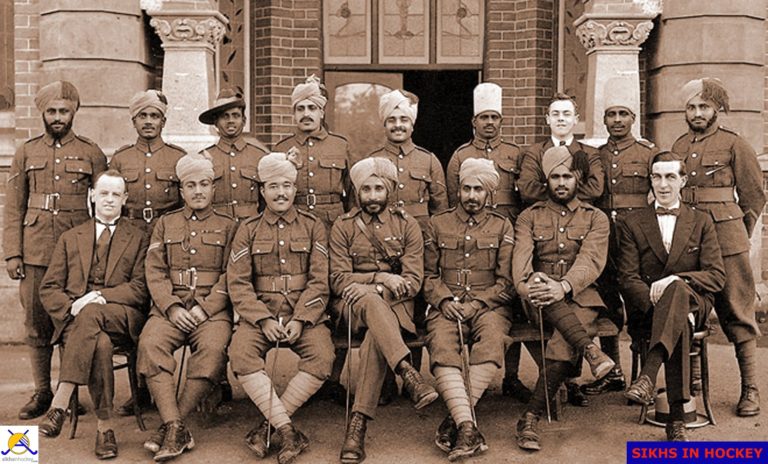
Indian Army Hockey Team in New Zealand 1926.
Photo credit: Thakar Singh family collection and SikhsinHockey.com
This tour and the prior formation of the IHF in 1925 laid the foundations for Indian hockey’s entrance onto the international stage. In May 1928 the IHF became the first non-European nation to affiliate to the International Hockey Federation (FIH) and Colonel Bruce Turnbull became India’s first representative on the FIH Council. In 1928 India would participate in the Olympic Games. The legendary forward Dhyan Chand, who was a member of the Indian Army team tour to New Zealand, would go on to win his first of three consecutive Olympic hockey gold medals with India (1928, 1932 & 1936).
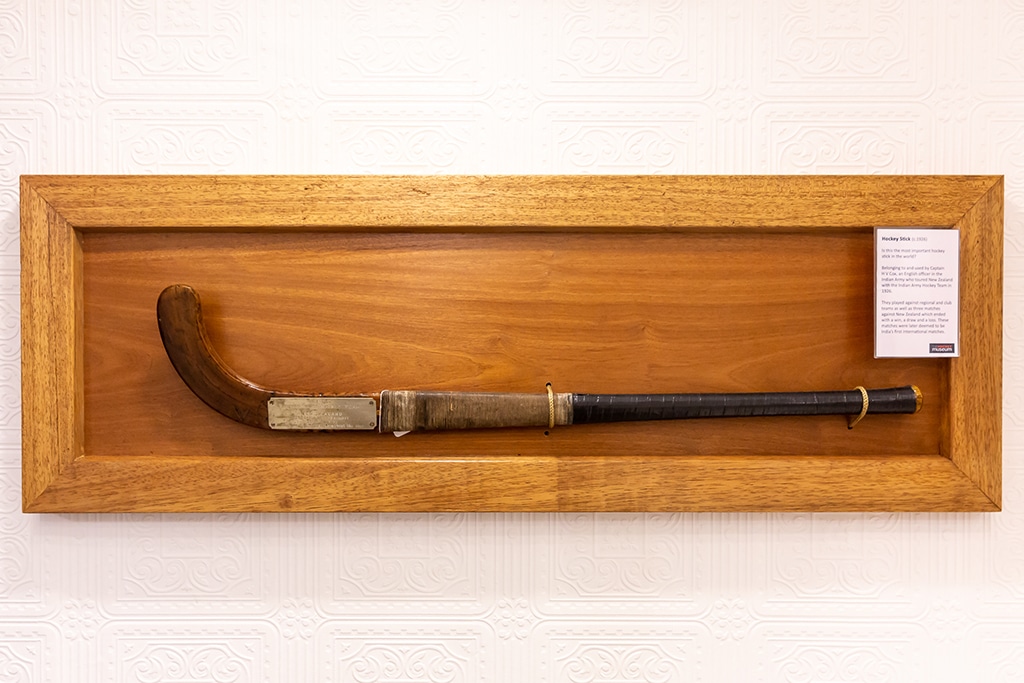
One of the British Officers from the New Zealand tour, Captain H V Cox of the 2nd Battalion, 8th Punjab Regiment, holds a notable connection to The Hockey Museum where his hockey stick is on display to visitors. The test matches during this first overseas tour by a British Indian Army team are today acknowledged by the IHF as India men’s first internation matches; therefore, Captain Cox is also recognised as one of the first international hockey players for India, alongside Dhyan Chand and his other teammates on the tour. That recognition is what makes his hockey stick and his story special – a rare piece of hockey history.
The story of the Indian Army hockey tour to New Zealand is a fascinating one. You can learn more about the players and the matches that took place in this article written and researched by one of The Hockey Museum’s founding trustees Diljit Bahra: The Indian Army hockey tour of New Zealand 1926 | Stick2Hockey